





Nichole K. Salinas, MA, LAC, is a licensed associate counselor dedicated to providing holistic, compassionate care for clients from all walks of... read more
As a parent of three high school sophomores (I have twin boys and a daughter 14 months younger), I am no stranger to the question, “Is this normal teenage moodiness or should I be concerned?” This is the question parents ask me frequently, and it’s a great question, but not an easy one to answer. Before we dive in, we need to establish what ‘normal’ teenage moodiness looks like and—more importantly—why it happens.
If you’ve seen the popular coming-of-age movie, Inside Out 2, you’ll know this sequel did an incredible job layering in the complexity of pre-teen and teenage emotions that plague our children when they enter the uncharted territory of puberty. New feelings such as Anxiety, Embarrassment, Envy, and Ennui became key players in the main character’s team of emotions. We see her struggling to emotionally regulate amid the social pressures she faces as an athlete, while navigating a broken friendship, and her inability to find self-acceptance. All these difficult experiences send her through a range of emotional states, while the “joy” inside her (a literal character) tries to find her place in Riley’s new complicated life.
Where does the moodiness come from?
The developmental period of adolescence can be broken down into a mix of biological changes and the psychosocial stage of identity versus role confusion. Erik Erikson describes this as the period of life where teens are trying to understand who they are, what they believe, and how they fit into the world. Forming a strong sense of self (identity) leads to high self-esteem, confidence, and motivation. Failure to achieve this (or perception of failure) leads to low self-esteem, confusion, and instability.
In a world where peer groups aren’t limited to school hallways but span the globe via a 24/7 digital connection, how difficult is it for a teenager to form an identity? Recent research has shown that a constant search for “self” is starting online. Experts in psychology, including the American Psychological Association and the World Health Organization, see social media as a “double-edged sword” – as it provides teens with an opportunity to connect, express, and explore who they are, but it can simultaneously create these psychological traps that make them question who they are. There’s also the additional pressure of the round-the-clock social comparison. Teens used to leave their social pressures at school but are now living in an “always-on” environment, where they must maintain their image in person and online – sometimes leading to a sense of “imposter syndrome” when they feel like they just can’t keep up.

As parents, what do we do to protect our teens from this digital loop of highs and lows online? Experts are not recommending we ban social media, but instead teach our kids about digital agency. Understanding how to use the internet and social media effectively is a core life skill. Helping our children to recognize predatory behavior, Ai-generated content, and how to seek trusted sources when conducting research, are all vital skills that support the goal of harm reduction. Boston Children’s Hospital created the “Family Digital Wellness Lab” which provides parents with best practices that are rooted in science. For more guidance on media across the board, including books, movies, tv, and gaming, Common Sense Media provides ratings, articles, and FAQs.
We know our teens are experiencing a cognitive struggle of identity, and we are aware that they are inundated with social pressures magnified by the online environment, so it’s no surprise that layering in the production of hormones that are responsible for puberty can seem like a recipe for disaster. Books like “Yes, Your Teen is Crazy,” written by Dr. Michael J. Bradley, describe the adolescent brain as “still under construction.” This book is written to help parents continue to lead with love, without losing their minds. Hormones impact more than the mind and the body, they also change behavior. Mood swings are normal occurrences, as the body is experiencing fluctuations in estrogen, progesterone, and testosterone. Hormones will level out as our teens move through puberty, but if there is a concern of significant hormonal imbalances, a doctor visit is an essential step to determine this.
How do I know when to seek counseling for my teen?
You may read this and walk away with more questions than answers and that’s okay. That’s the point actually – that you have questions, the right questions. So what are those questions?
Using this DII Framework, we can differentiate between typical adolescent development versus when there is a clinical mental health concern.
- Duration: Has this behavior lasted more than two weeks?
- Intensity: Is the emotional reaction disproportionate to the situation?
- Impact: Is it interfering with school, friendships, or physical health (sleep/eating)?
What does the moodiness look like?
| Category | Typical Adolescent Development | Clinical Mental Health Concern |
| Depression | Occasional “moodiness,” irritability after a bad day, or wanting privacy. | Pervasive “emptiness,” loss of interest in hobbies (anhedonia), or significant sleep changes. |
| Anxiety | Stress about a specific exam, a big game, or a social event. | Persistent “what-if” thinking, physical symptoms (stomach aches), and avoiding school or friends. |
| ADHD | Occasional forgetfulness or being “scattered” when overwhelmed by a heavy workload. | Chronic inability to follow multi-step directions, impulsivity that affects safety, or executive dysfunction in all settings. |
| Trauma | Short-term upset after a stressful event (e.g., a breakup) that eventually resolves. | Flashbacks, hypervigilance (always being “on guard”), or sudden, unexplained emotional outbursts. |
What else can I do at home?
Parenting a teenager is not for the weary. You maybe wondering if things will ever go back to “normal.” If you had an impact on the behaviors you are seeing. If you are doing enough or doing too much. You might be wondering how to balance control as you seek to give your teen more opportunities to learn through their own experiences, but also need to intervene and protect them from risky behaviors. All of your concerns are real and valid.
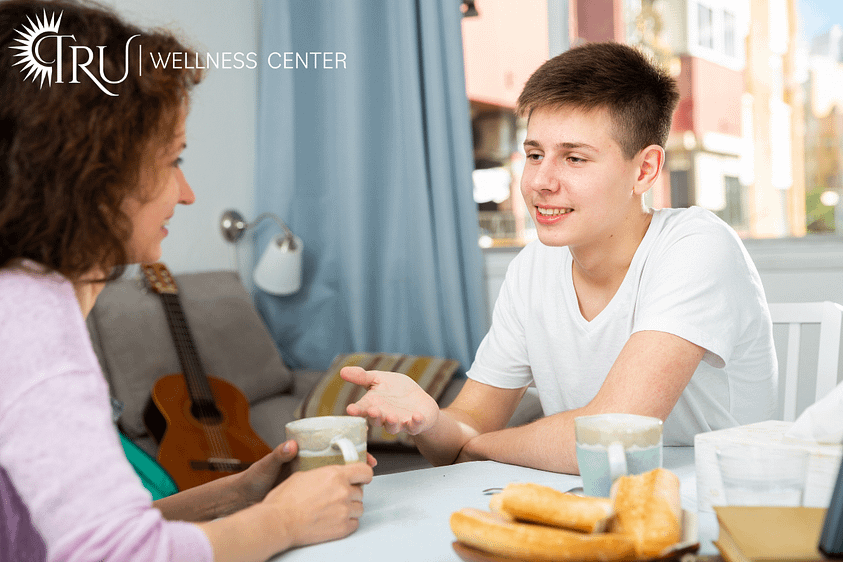
Here are some resources to help you navigate your own emotions during this challenging stage of parenting. These are not specifically parenting resources, like ones discussed earlier. These resources can be used by you and your teen – which helps to foster that reminder that you are in this together.
Recommended Readings:
I Hear You: The Surprisingly Simple Skill Behind Extraordinary Relationships, by Michael S. Sorensen
A short, practical guide focused on the power of validation, which leads to improved communication, relationships, and reduced conflict.
The Let Them Theory, by Mel Robbins:
By simply “letting them” do what they will, you protect your own peace and energy, shifting your focus from external frustration to your own internal reactions and goals.
If you are considering providing your teen with counseling support, or even feel you might need this resource yourself, the time to reach out is now. Family counseling can provide you with the tools to reconnect and understand each other’s perspectives. While individual counseling can give your teen an outlet and safe space to gain tools, confidence, and find their identity to promote emotional well-being.